

Why Stainless Steel Cabinets for Outdoor Kitchens Outlast the Alternatives
Stainless steel cabinets for outdoor kitchens hold up because an outdoor kitchen is a harsher place than most people account for while planning one. Rain, humidity, hard freezes, direct sun, and the occasional mouse all work on cabinetry that sits outside year-round, and materials that perform fine indoors fail quickly once exposed. Stainless resists all of it without a coating that can chip or a substrate that can swell. Add cabinets sized around the grill and structure you already have, and the case gets stronger.
What Is a Wisconsin Winter Doing to Your Outdoor Cabinets?
Moisture
Water is the first problem, and it rarely arrives as obvious rain. Humidity, condensation, and splash from a sink or cooler all find their way into cabinet boxes. Particleboard and MDF swell and lose structure. Plywood delaminates. Painted and laminated surfaces bubble and peel from behind once water gets under the finish.
The Freeze-Thaw Cycle
This is what separates a Wisconsin outdoor kitchen from one in a mild climate. Water that has soaked into a material expands when it freezes and contracts when it thaws, and repeating that through a winter pries materials apart from the inside. Anything that absorbs moisture is on a countdown here.
Sun Exposure
Ultraviolet light breaks down finishes, sealers, and plastics. Colors fade, clear coats chalk, and some polymers turn brittle. A surface that looked sharp the first summer can look tired by the third.
Pests
Yes, and it is a real consideration on rural and lake properties. Wood and composite boxes give insects and rodents something to chew and nest in. Sealed metal does not.
How Do Stainless Steel Cabinets for Outdoor Kitchens Handle the Elements?
Stainless steel answers each of those conditions with the same property: corrosion resistance that comes from the alloy itself rather than from a coating applied to the outside.
Water does not soak in, so there is nothing to swell, delaminate, or split when it freezes. There is no paint or laminate layer to bubble, because the finish is the metal. UV exposure does not degrade it. Insects and rodents have nothing to chew. And when a door or box does get damaged, it can usually be repaired or swapped as a single piece rather than pulling apart the whole run.
Does the Grade and Finish of the Steel Matter Outdoors?
More than it does indoors. Stainless comes in different grades, and the ones with higher corrosion resistance perform better in wet or salty conditions. Near a pool, a hot tub, or a lake, that difference shows up faster.
Finish matters too. A brushed finish hides water spotting and fingerprints better than a polished one, which is worth weighing for a surface that will be rained on and wiped down constantly. Ask which grades and finishes your fabricator stocks for outdoor work, and tell them where the kitchen sits.
Why Does Custom Sizing Matter More Outdoors?
An outdoor kitchen is almost never a clean rectangle of standard cabinet widths. It is a grill of a specific size, a side burner, a cooler drawer, a sink, and often a masonry or framed structure that was poured or laid before anyone measured for cabinetry. Standard dimensions leave gaps, and gaps outdoors collect water and debris.
Cabinets fabricated to your measurements close around the equipment you actually bought, with cutouts sized to your appliances and runs that follow the structure already there. Drawer banks, door swings, and access panels land where you use them instead of where a stock configuration puts them.
What Maintenance Do Outdoor Stainless Cabinets Actually Need?
Less than the alternatives, though not none. Wash the surfaces periodically with mild soap and water to clear pollen, dust, and grill residue, then dry them to avoid spotting from hard water. Wipe up anything salty or acidic that sits. Keep grill grease from baking onto the doors across a season. If a spot of surface rust appears, it is almost always contamination from another metal sitting on the surface rather than the stainless corroding, and it cleans off with a non-abrasive stainless cleaner worked along the grain.
Common Questions About Stainless Steel Cabinets for Outdoor Kitchens
Do stainless cabinets get too hot to touch in direct sun?
Any material in full sun heats up, and a dark surface gets warmer than a light one. Stainless in a brushed finish reflects a fair amount of light and generally stays manageable, though shade or an overhang helps regardless of material.
Will they rust?
Stainless resists rust rather than being immune to it. Most rust-colored spotting people notice is surface contamination from another metal, not the cabinet corroding, and it cleans off. Choosing an appropriate grade for a wet or lakeside location reduces the chance further.
Can stainless cabinets match a masonry or stone outdoor kitchen?
Yes, and the pairing is common. Stainless doors and drawer fronts set into a stone or stucco structure is one of the more frequent outdoor kitchen configurations, with the metal carrying the working surfaces and the masonry carrying the look.
Can I add cabinets to an outdoor kitchen I already have?
Usually. Fabricated cabinets can be sized to fill an existing opening or extend a run, which is far easier than trying to match a discontinued stock line.
Planning an Outdoor Kitchen?
Send us your layout and appliance list, and we’ll follow up with a clear quote for custom stainless steel cabinets, fast.
Benefits of Stainless Steel Countertops Made Custom for Your Space
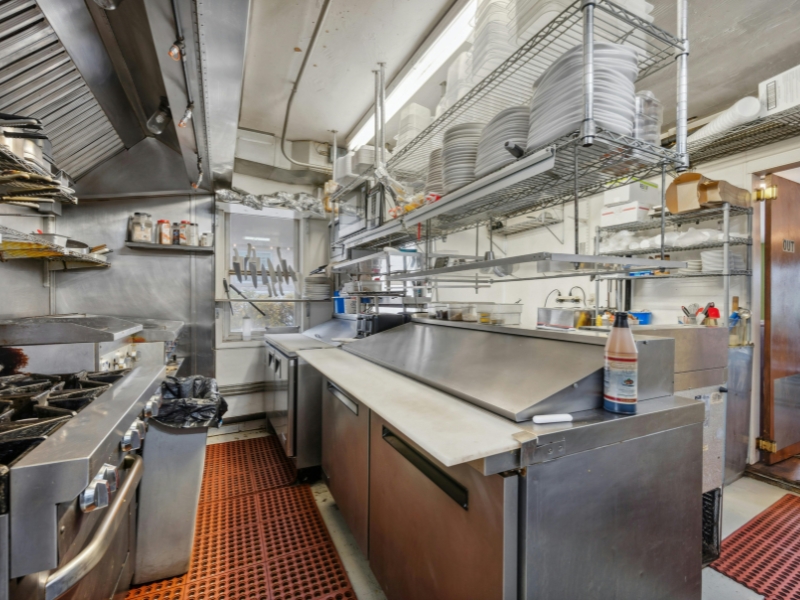
The benefits of stainless steel countertops come down to a surface that does not absorb anything, does not need sealing, and does not flinch at heat. Add custom fabrication and you get one more advantage a prefabricated counter cannot offer: the countertop is made to your measurements instead of your layout being adjusted to fit a stock size. That combination is why the same material turns up in restaurant prep lines and in home kitchens where the owner cooks seriously. Here is what each of those advantages actually means day to day.
What Are the Main Benefits of Stainless Steel Countertops?
A few properties do most of the work here, and they reinforce each other.
Nonporous
Yes, and that single property drives most of the rest. There is nowhere for liquid, oil, or bacteria to soak in, so red wine, lemon juice, tomato, and raw chicken all sit on top of the surface until they are wiped away. Porous surfaces like natural stone rely on a sealer to imitate that behavior, and a sealer wears down over time. Stainless has no coating to lose.
Heat Tolerance
You can set a hot pan directly on it. Stainless steel does not scorch, discolor, or weaken from the kind of heat a kitchen produces, which is why professional kitchens standardized on it long before it became a residential look. No trivet requirement, and no worrying about a cast iron pan leaving a permanent ring.
Low Maintenance
No. Upkeep is soap, water, and drying to avoid water spots, plus an occasional stainless cleaner if you want the finish to look even. Nothing gets resealed on a schedule and nothing needs a specialty product. Across years, that difference adds up more than most people expect when they are comparing surfaces in a showroom.
Where Does Custom Fabrication Change the Answer?
This is what separates a fabricated counter from a prefabricated one, and it is where most of the value lives on a real project.
What Can Be Fabricated Into the Countertop Itself?
Sink bowls can be welded in and polished so there is no rim to trap crumbs. Drainboards can be formed directly into the surface with a slope toward the sink. Backsplash lips can turn up the wall as one continuous piece rather than a separate strip caulked into place. Cooktop and faucet cutouts land exactly where your appliances land. Each of those is a spot where a standard counter forces a compromise.
What Happens When the Walls Are Not Square?
Almost no room is perfectly square, and older buildings are worse. A fabricated counter is cut to measurements taken in your space, so an out-of-square wall becomes a dimension on the drawing instead of a gap you fill with caulk. The same goes for an island with an angle, a peninsula that has to clear a doorway, or a prep run that steps around equipment already in place.
Which Finish Should You Choose?
Finish changes both how the counter looks and how it wears, so it is worth making a deliberate decision rather than defaulting.
A brushed finish is the common choice. Its directional grain hides fingerprints and the fine scratching any working surface picks up.
A polished finish reflects light and reads as a feature surface, which suits a bar or an island more than a heavy prep area.
A textured finish hides wear best and is often specified for high-traffic commercial counters.
Flexible Applications
The demands overlap more than people assume. Both see heat, standing water, acidic food, and repeated cleaning. A restaurant just compresses years of that into months. A homeowner outfitting an outdoor kitchen adds weather and temperature swings on top of normal use, and the same material answers all three. Restaurants tend to specify heavier materials and simpler finishes, while residential projects lean toward edge profiles and integrated details, but the surface underneath does the same job.
What Does Stainless Steel Not Do Well?
Worth being straight about. It shows fine scratches, most noticeably in the first year, and a brushed finish absorbs them better than a polished one. A heavy impact can dent it in a way stone will not. Fingerprints show on polished finishes. And in a kitchen designed around warm traditional materials, a large expanse of stainless can read cold unless wood, stone, or color balances it elsewhere in the room. None of that is a dealbreaker. It is just worth knowing before you commit.
Common Questions About the Benefits of Stainless Steel Countertops
Do stainless steel countertops scratch?
Yes, and most owners describe the result as a patina rather than damage. Fine scratches accumulate early, then stop registering as they blend into the overall surface, particularly on a brushed finish.
Can a sink be part of the countertop itself?
Yes. An integrated sink is welded into the counter and the seam is polished out, so there is no rim or joint where debris collects. It is one of the more common reasons people choose fabricated stainless over a prefabricated surface.
Are stainless steel countertops only for modern kitchens?
No. Finish and edge profile carry most of the visual weight. A brushed finish with a rolled edge alongside wood cabinetry reads far warmer than a polished square-edge counter in an all-white kitchen.
How long do stainless steel countertops last?
Decades, with normal care. The surface changes appearance as it picks up a patina, but it does not degrade the way a sealer or a coating does, and there is no point at which it has to be refinished to keep working.
Thinking About a Stainless Counter?
Send us your layout, and we’ll follow up with a clear quote for custom stainless steel countertops, fast.
Stainless Steel Countertops vs. Granite: Which Is Better for Your Space?
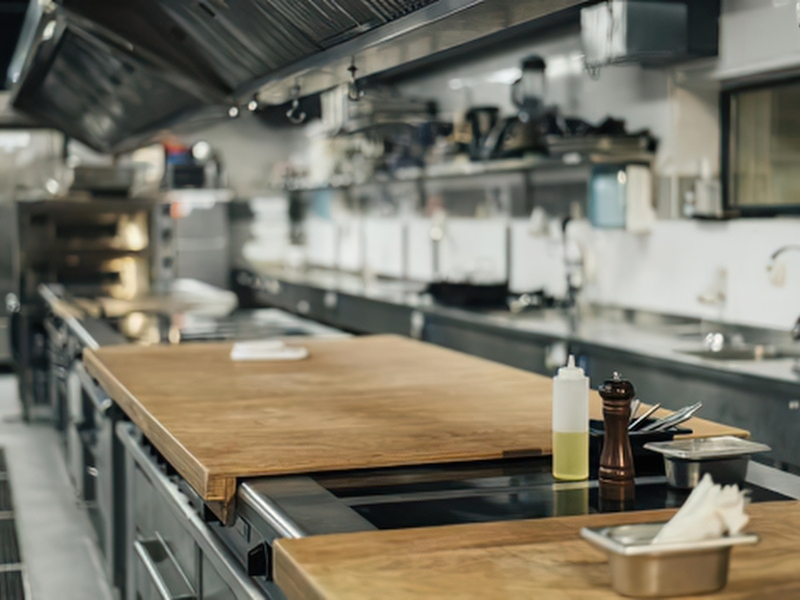
Choosing between stainless steel countertops vs granite comes down to one question: what actually happens on that surface every day? Stainless steel handles constant heat, standing liquid, harsh cleaners, and heavy daily use, and it can be fabricated to fit a layout exactly. Granite brings natural color and pattern, resists scratching better, and suits a kitchen where the counter is meant to be the visual centerpiece. Neither material is the right answer in every room. The decision gets a lot easier once you are honest about how hard the surface will be worked.
How Do Stainless Steel Countertops vs Granite Compare at a Glance?
Both surfaces last for decades with reasonable care. They age differently, though, and that is the part worth understanding before you commit. Stainless picks up fine scratches and the occasional dent, settling into a soft patina that some people like and others do not. Granite chips at exposed edges and will stain if its sealer wears thin without anyone noticing.
There is also a structural difference that matters more than most comparisons admit. Granite reaches you as a slab of stone cut to fit your space. A stainless counter is fabricated to your measurements from the start.
How Does Each Surface Handle Daily Use?
Which One Handles Heat Better?
Stainless steel takes direct contact with hot pans without scorching, discoloring, or losing strength, which is why it is standard in professional kitchens. Granite tolerates heat well too, but repeated thermal shock in the same spot can cause cracking near seams and cutouts, and heat gradually degrades surface sealers.
Which One Scratches or Dents More Easily?
Granite is the harder surface and resists scratching from knives and cookware. Stainless will show fine scratches, most visibly in the first year. On a brushed finish, those blend into the grain and stop registering as damage. Impact runs the other direction: a dropped stockpot is more likely to dent stainless and more likely to chip granite.
How Does Each Surface Handle Stains and Cleanup?
Stainless steel is nonporous, so wine, citrus, oil, and raw protein sit on the surface and wipe away rather than soaking in. Granite is porous and depends on a sealer to do that same job. In a home kitchen, resealing is a manageable habit. In a restaurant kitchen running fourteen hours a day, it becomes one more maintenance item competing for attention.
What Does Upkeep Look Like Year After Year?
Stainless steel needs mild soap and water, drying to prevent water spots, and occasional attention from a cleaner made for stainless. Nothing gets resealed and nothing runs on a treatment schedule.
Granite needs periodic resealing on a cycle that varies with the stone, the sealer, and how hard the counter gets used. Missed resealing is behind most granite staining problems people actually run into. Neither surface is demanding. Stainless simply has fewer steps to remember.
How Do Fit, Seams, and Custom Sizing Differ?
This is where the comparison stops being about material properties. Granite arrives as slabs, so your layout has to work around slab dimensions, and seams land where the stone runs out rather than where you would choose. Custom stainless steel countertops are cut and formed to your measurements, with sink and cooktop cutouts, edge profiles, and integrated backsplash lips fabricated into the piece instead of added afterward.
For a straightforward rectangular run, this barely registers. For an island with an odd angle, a prep line that has to clear equipment already in place, or a counter meeting a wall that is not square, it often matters more than everything above it.
What Do Stainless Steel Countertops Cost Compared to Granite?
Both materials cover a wide price range, which is why per-square-foot averages mislead. Granite pricing tracks the stone itself, from common domestic slabs at the low end to rare imported material at the top, plus fabrication and installation. Stainless pricing tracks gauge, finish, total square footage, and how much fabrication the piece actually requires. A simple counter with one sink cutout lands well below an L-shaped run with an integrated drainboard and a waterfall edge.
Neither material is dependably cheaper than the other. Price your real layout rather than a category.
Which Material Works Best in Each Room?
The stainless steel countertops vs granite question resolves quickly once you name the room.
What Works Best in Commercial Kitchens and Prep Lines?
Stainless, with little debate. Heat tolerance, a nonporous surface, and the ability to fabricate counters around equipment that is already in place make it the working standard in food service.
What About Home Kitchens?
Genuinely open. Granite suits a traditional or transitional kitchen where the counter carries visual weight. Stainless suits homeowners who cook hard, want a clean modern line, or are matching an existing appliance package. Plenty of kitchens use both, with granite on the perimeter and stainless on an island or a dedicated baking station.
Which Is Better for a Bar or Entertaining Space?
Stainless deals with standing liquid, citrus, and melting ice better than sealed stone, and a polished bar top throws light in a way stone does not.
Which One Belongs in an Outdoor Kitchen?
Stainless has the clear edge outdoors. Granite can go outside, but freeze-thaw cycling and sealer breakdown under sun exposure are real problems in a Wisconsin climate.
Common Stainless Steel Countertops vs Granite Questions We’re Asked
Does stainless steel scratch more easily than granite?
Yes. Granite is harder and resists scratching better. What changes the picture is how each material shows its wear. Fine scratches disappear into a brushed stainless finish over time, while a chip in a granite edge stays a chip.
Are stainless steel countertops noisy to work on?
Less than people expect, because it depends on what sits underneath. A stainless top fabricated over a solid substrate dampens sound considerably compared to an unsupported sheet, which is worth specifying when the counter sits in an open kitchen.
Can stainless steel countertops look warm instead of industrial?
Finish and edge profile do most of that work. A brushed or textured finish with a rolled edge reads much softer than a polished square-edge counter, and pairing stainless with wood or stone elsewhere in the room balances the look.
Is stainless steel cheaper than granite?
Sometimes, depending on the specific stone and the amount of fabrication your layout requires. There is no reliable rule in either direction, which is why both are worth quoting on your actual measurements.
Comparing Options for Your Space?
Send us your layout, and we’ll follow up with a clear quote for custom stainless steel countertops, fast.