
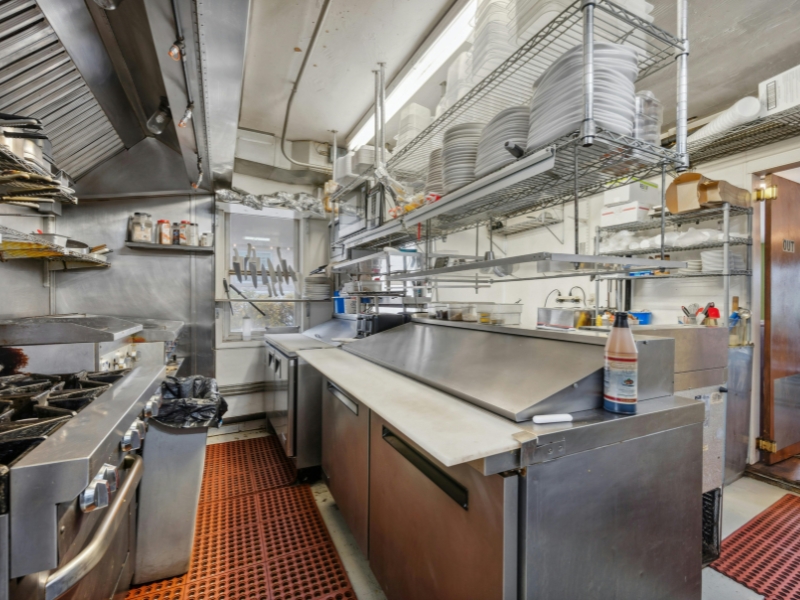
Why Stainless Steel Is Used in Commercial Kitchens
Why stainless steel is used in commercial kitchens comes down to a surface that absorbs nothing, tolerates heat, survives industrial cleaning chemicals, and can be repaired instead of replaced. A working kitchen puts more stress on its surfaces in a year than a home kitchen does in a decade, and most materials that look fine in a showroom cannot take it. Stainless can, which is why it became the standard long before it became a design choice.
What Is a Commercial Kitchen Doing to Its Surfaces?
It helps to be specific about the abuse, because that is what the material selection is answering.
Heat arrives constantly, from pans set down straight off a burner and from equipment radiating all service. Moisture never fully leaves, between washdowns, steam, and splash. Cleaning chemicals are far more aggressive than anything used at home, applied several times a day. Volume means hundreds of contacts per surface per shift. And impact happens, because full hotel pans and stock pots get set down hard by people moving fast.
Any surface in that room is being tested on five fronts at once, every day, for years.
Why is Stainless Steel Is Used in Commercial Kitchens Rather Than the Alternatives?
Nonporous
It means there is no structure in the surface for liquid or residue to enter. Raw protein juices, oil, acid from citrus and tomato, and cleaning solution all stay on top of the metal until they are wiped away. Porous surfaces need a sealer to imitate that, and a sealer is a consumable that degrades with heat and chemicals. Stainless has no layer to lose.
Heat Tolerance
More than a kitchen produces. Hot pans set directly on a stainless surface do not scorch it, discolor it permanently, or weaken it. Surfaces next to fryers and ranges hold their shape through years of thermal cycling, which is where laminates delaminate and sealed stone develops cracks near seams.
Commercial Cleaning Chemicals
Yes, which is a bigger deal than it sounds. Degreasers and sanitizers used in food service are far harsher than household cleaners, and they are applied constantly. Stainless tolerates that routine without the surface breaking down. The main exception is chlorine bleach left sitting, which can pit the surface and should be rinsed rather than allowed to dry.
Damage
It can usually be repaired in place. Scratches blend into a brushed finish or can be worked back along the grain. A dented section can be replaced without tearing out the run beside it. A worn edge can be re-welded and polished. Compare that to a chipped stone counter or a delaminated laminate top, where the practical answer is replacement.
What Does “Stainless” Actually Mean?
It is an alloy, not a coating. Chromium in the steel reacts with oxygen to form a thin passive layer across the surface, and that layer is what resists corrosion. The useful part is that it reforms on its own when the surface is scratched, so a scuff does not create a permanent weak spot the way a break in a coating does.
Stainless resists rust rather than being immune to it. Most rust-colored spotting people find on a stainless surface is contamination from another metal left sitting there, such as a steel wool pad or a cast iron pan, and it cleans off without the stainless underneath being affected.
Where Does Fabrication Quality Show Up?
The material only delivers if the piece is made well, and this is where kitchens differ most.
Welded seams that are ground and polished smooth leave nothing to trap residue. Coved corners are easier to clean than square internal corners. Surfaces sloped toward a drain clear water instead of holding it. Edges that turn down rather than ending in a raw cut are safer and hold their shape. Pieces fabricated to the room’s real dimensions close the gaps where standard equipment leaves an unreachable strip along a wall.
Two kitchens can be built from the same material and clean very differently depending on how the pieces were fabricated.
What Doesn’t Stainless Steel Solve?
It scratches, and in a commercial kitchen it will, quickly. The finish develops a working patina within months, which is normal and does not affect performance. It shows water spots in hard water areas unless surfaces are dried. It dents under heavy impact. And it does nothing about a poor layout, because the best surface in the world still fails if the station it sits in makes people reach across a hot line.
Common Questions About Stainless Steel in Commercial Kitchens
Does stainless steel harbor bacteria?
The surface is nonporous, so there is nowhere for residue to soak in, which is why it is the standard for food contact surfaces. Cleaning practice still does the real work, and seam and corner quality affects how easy that is.
Why do some kitchens have stainless that looks worse than others?
Usually a combination of finish choice, water hardness, and cleaning method. Abrasive pads used across the grain and chlorine cleaners left to dry account for most of the damage people blame on the metal.
Is thicker stainless always better?
Heavier material resists denting and feels more solid, and it costs more. The right choice depends on the piece, since a prep table takes different abuse than a wall panel.
Can stainless surfaces be added to a kitchen that is already running?
Yes. Individual pieces can be fabricated to match existing dimensions and finish and installed around service hours, which is far easier than replacing a full run.
Outfitting a Commercial Kitchen?
Send us your layout and equipment list, and we’ll follow up with a clear quote, fast.

Custom Metal Fabrication for Restaurants, Zone by Zone
Custom metal fabrication for restaurants covers nearly every working surface between the back door and the bar. Prep tables, countertops, backsplashes, shelving, cabinets, and equipment stands all get fabricated to the dimensions of your actual space rather than ordered in standard widths and made to fit. The reason to go custom is not appearance. It is that a commercial kitchen is a workflow, and standard sizing forces compromises in exactly the places where a few inches change how a shift runs.
What Does Custom Metal Fabrication for Restaurants Cover, Zone by Zone?
Following the path food takes through the space is the easiest way to scope a project.
Receiving and Dry Storage
Heavy-duty shelving sized to the room rather than to a catalog, wall-mounted racks that clear a door swing, and rolling carts built for the aisle width you actually have. This zone is where standard shelving wastes the most space, because storage rooms are rarely dimensioned like showroom displays.
Prep Area
Prep tables sized to the crew that works them, with undershelves at heights that match your containers. Wall-mounted shelving above. Sink assemblies with integrated drainboards. This is the zone where custom sizing pays off fastest, because prep stations are where people stand shoulder to shoulder during a rush.
Cook Line
Equipment stands sized to the specific pieces you bought, landing shelves at the pass, and backsplashes and wall panels behind the line where grease and heat hit hardest. Cook lines are almost never a clean rectangle, and the gaps standard equipment leaves are the hardest places in a kitchen to keep clean.
Dish and Warewashing?
Soiled and clean landing tables sized to your machine, sloped surfaces that drain where you want them to, and wall panels around the splash zone. Dish is the wettest area in the kitchen, which makes seam quality and drainage more than a cosmetic concern.
Front of House and Bar
Bar tops, speed rail structures, back-bar shelving, service counters, and stations sized around the ice bin and glass washer you already own. Front-of-house work has to survive the same abuse as the back while looking like part of the dining room.
Why Does Custom Sizing Beat Standard Equipment in a Restaurant?
Standard commercial equipment comes in fixed widths. Real kitchens come in whatever dimensions the building gave you, usually with a column, a floor drain, or a door in an inconvenient spot.
Filling the difference with a gap creates a place that collects debris and cannot be cleaned properly. Filling it with a piece of trim creates a seam that fails. Fabricating the piece to the actual dimension removes the problem instead of covering it, and it recovers working surface you would otherwise lose in half-inch increments across the room.
How Does Fabrication Fit a Restaurant Timeline?
Restaurant projects run against fixed dates. An opening, a lease start, an inspection, a reopening after a remodel. Kitchen fabrication tends to land late in the sequence, after the space is framed and the equipment is specified, which compresses the window.
The practical move is getting measurements taken as early as the space allows and confirming the equipment list before fabrication starts, since a change to one appliance can change the dimensions of the pieces on both sides of it. Tell your fabricator the opening date at the quote stage rather than after the order, so anything unrealistic surfaces while there is still time to adjust.
Can You Work Alongside Our Contractor or Kitchen Designer?
That is the normal arrangement rather than the exception. On most buildouts the fabricator coordinates with a general contractor on wall and utility locations, with a kitchen designer on layout, and with the equipment supplier on final appliance dimensions.
What makes that go smoothly is early access for field measurements and a confirmed equipment list. What makes it go badly is fabricating from architectural drawings that never got updated after a wall moved.
Can Pieces Be Replaced in a Kitchen That’s Already Open?
Yes, and it is common. A worn prep table, a damaged countertop, a backsplash behind a replaced piece of equipment, or a new station added to an existing line can all be fabricated to match what is already there.
The advantage over ordering a replacement is fit. A piece made to the current opening drops in without shimming, and it can be scheduled around your service hours rather than requiring a shutdown.
Common Questions About Restaurant Fabrication
How early should we start the fabrication conversation?
As soon as you have a layout and an equipment list, even a draft one. Early conversations are cheap, and late changes are not.
Can you match existing pieces in our kitchen?
Usually. Matching finish and dimension on an existing run is routine, which is often easier than sourcing a discontinued equipment line.
Do you handle installation?
Ask about delivery and installation support when you request a quote, since coordination around your schedule is part of the scope on most restaurant work.
What should we send to get a quote?
A kitchen layout, your equipment list with model numbers, your target date, and photos of the space if it exists yet. That combination gets you a real number rather than a range.
Have a Kitchen Timeline to Hit?
Send us your layout and opening date, and we’ll follow up with a clear quote for your kitchen, fast.
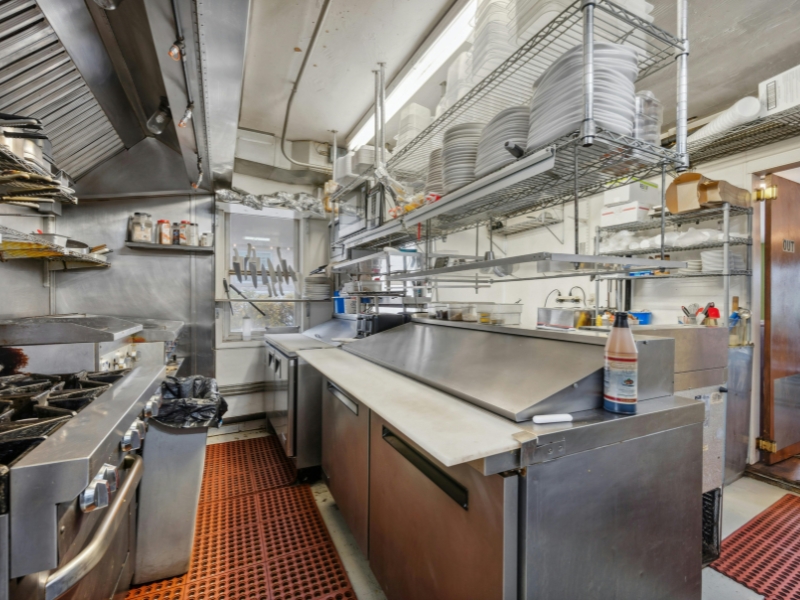
Benefits of Stainless Steel Countertops Made Custom for Your Space
The benefits of stainless steel countertops come down to a surface that does not absorb anything, does not need sealing, and does not flinch at heat. Add custom fabrication and you get one more advantage a prefabricated counter cannot offer: the countertop is made to your measurements instead of your layout being adjusted to fit a stock size. That combination is why the same material turns up in restaurant prep lines and in home kitchens where the owner cooks seriously. Here is what each of those advantages actually means day to day.
What Are the Main Benefits of Stainless Steel Countertops?
A few properties do most of the work here, and they reinforce each other.
Nonporous
Yes, and that single property drives most of the rest. There is nowhere for liquid, oil, or bacteria to soak in, so red wine, lemon juice, tomato, and raw chicken all sit on top of the surface until they are wiped away. Porous surfaces like natural stone rely on a sealer to imitate that behavior, and a sealer wears down over time. Stainless has no coating to lose.
Heat Tolerance
You can set a hot pan directly on it. Stainless steel does not scorch, discolor, or weaken from the kind of heat a kitchen produces, which is why professional kitchens standardized on it long before it became a residential look. No trivet requirement, and no worrying about a cast iron pan leaving a permanent ring.
Low Maintenance
No. Upkeep is soap, water, and drying to avoid water spots, plus an occasional stainless cleaner if you want the finish to look even. Nothing gets resealed on a schedule and nothing needs a specialty product. Across years, that difference adds up more than most people expect when they are comparing surfaces in a showroom.
Where Does Custom Fabrication Change the Answer?
This is what separates a fabricated counter from a prefabricated one, and it is where most of the value lives on a real project.
What Can Be Fabricated Into the Countertop Itself?
Sink bowls can be welded in and polished so there is no rim to trap crumbs. Drainboards can be formed directly into the surface with a slope toward the sink. Backsplash lips can turn up the wall as one continuous piece rather than a separate strip caulked into place. Cooktop and faucet cutouts land exactly where your appliances land. Each of those is a spot where a standard counter forces a compromise.
What Happens When the Walls Are Not Square?
Almost no room is perfectly square, and older buildings are worse. A fabricated counter is cut to measurements taken in your space, so an out-of-square wall becomes a dimension on the drawing instead of a gap you fill with caulk. The same goes for an island with an angle, a peninsula that has to clear a doorway, or a prep run that steps around equipment already in place.
Which Finish Should You Choose?
Finish changes both how the counter looks and how it wears, so it is worth making a deliberate decision rather than defaulting.
A brushed finish is the common choice. Its directional grain hides fingerprints and the fine scratching any working surface picks up.
A polished finish reflects light and reads as a feature surface, which suits a bar or an island more than a heavy prep area.
A textured finish hides wear best and is often specified for high-traffic commercial counters.
Flexible Applications
The demands overlap more than people assume. Both see heat, standing water, acidic food, and repeated cleaning. A restaurant just compresses years of that into months. A homeowner outfitting an outdoor kitchen adds weather and temperature swings on top of normal use, and the same material answers all three. Restaurants tend to specify heavier materials and simpler finishes, while residential projects lean toward edge profiles and integrated details, but the surface underneath does the same job.
What Does Stainless Steel Not Do Well?
Worth being straight about. It shows fine scratches, most noticeably in the first year, and a brushed finish absorbs them better than a polished one. A heavy impact can dent it in a way stone will not. Fingerprints show on polished finishes. And in a kitchen designed around warm traditional materials, a large expanse of stainless can read cold unless wood, stone, or color balances it elsewhere in the room. None of that is a dealbreaker. It is just worth knowing before you commit.
Common Questions About the Benefits of Stainless Steel Countertops
Do stainless steel countertops scratch?
Yes, and most owners describe the result as a patina rather than damage. Fine scratches accumulate early, then stop registering as they blend into the overall surface, particularly on a brushed finish.
Can a sink be part of the countertop itself?
Yes. An integrated sink is welded into the counter and the seam is polished out, so there is no rim or joint where debris collects. It is one of the more common reasons people choose fabricated stainless over a prefabricated surface.
Are stainless steel countertops only for modern kitchens?
No. Finish and edge profile carry most of the visual weight. A brushed finish with a rolled edge alongside wood cabinetry reads far warmer than a polished square-edge counter in an all-white kitchen.
How long do stainless steel countertops last?
Decades, with normal care. The surface changes appearance as it picks up a patina, but it does not degrade the way a sealer or a coating does, and there is no point at which it has to be refinished to keep working.
Thinking About a Stainless Counter?
Send us your layout, and we’ll follow up with a clear quote for custom stainless steel countertops, fast.
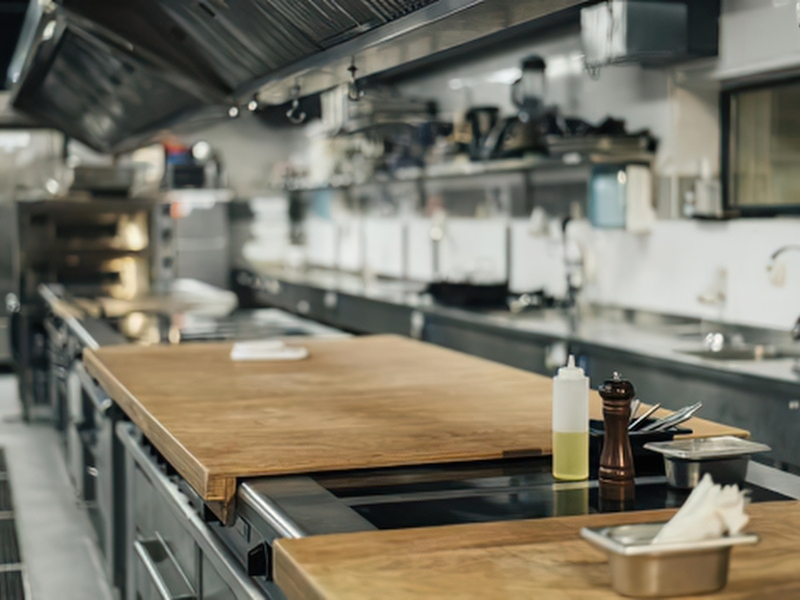
Stainless Steel Countertops vs. Granite: Which Is Better for Your Space?
Choosing between stainless steel countertops vs granite comes down to one question: what actually happens on that surface every day? Stainless steel handles constant heat, standing liquid, harsh cleaners, and heavy daily use, and it can be fabricated to fit a layout exactly. Granite brings natural color and pattern, resists scratching better, and suits a kitchen where the counter is meant to be the visual centerpiece. Neither material is the right answer in every room. The decision gets a lot easier once you are honest about how hard the surface will be worked.
How Do Stainless Steel Countertops vs Granite Compare at a Glance?
Both surfaces last for decades with reasonable care. They age differently, though, and that is the part worth understanding before you commit. Stainless picks up fine scratches and the occasional dent, settling into a soft patina that some people like and others do not. Granite chips at exposed edges and will stain if its sealer wears thin without anyone noticing.
There is also a structural difference that matters more than most comparisons admit. Granite reaches you as a slab of stone cut to fit your space. A stainless counter is fabricated to your measurements from the start.
How Does Each Surface Handle Daily Use?
Which One Handles Heat Better?
Stainless steel takes direct contact with hot pans without scorching, discoloring, or losing strength, which is why it is standard in professional kitchens. Granite tolerates heat well too, but repeated thermal shock in the same spot can cause cracking near seams and cutouts, and heat gradually degrades surface sealers.
Which One Scratches or Dents More Easily?
Granite is the harder surface and resists scratching from knives and cookware. Stainless will show fine scratches, most visibly in the first year. On a brushed finish, those blend into the grain and stop registering as damage. Impact runs the other direction: a dropped stockpot is more likely to dent stainless and more likely to chip granite.
How Does Each Surface Handle Stains and Cleanup?
Stainless steel is nonporous, so wine, citrus, oil, and raw protein sit on the surface and wipe away rather than soaking in. Granite is porous and depends on a sealer to do that same job. In a home kitchen, resealing is a manageable habit. In a restaurant kitchen running fourteen hours a day, it becomes one more maintenance item competing for attention.
What Does Upkeep Look Like Year After Year?
Stainless steel needs mild soap and water, drying to prevent water spots, and occasional attention from a cleaner made for stainless. Nothing gets resealed and nothing runs on a treatment schedule.
Granite needs periodic resealing on a cycle that varies with the stone, the sealer, and how hard the counter gets used. Missed resealing is behind most granite staining problems people actually run into. Neither surface is demanding. Stainless simply has fewer steps to remember.
How Do Fit, Seams, and Custom Sizing Differ?
This is where the comparison stops being about material properties. Granite arrives as slabs, so your layout has to work around slab dimensions, and seams land where the stone runs out rather than where you would choose. Custom stainless steel countertops are cut and formed to your measurements, with sink and cooktop cutouts, edge profiles, and integrated backsplash lips fabricated into the piece instead of added afterward.
For a straightforward rectangular run, this barely registers. For an island with an odd angle, a prep line that has to clear equipment already in place, or a counter meeting a wall that is not square, it often matters more than everything above it.
What Do Stainless Steel Countertops Cost Compared to Granite?
Both materials cover a wide price range, which is why per-square-foot averages mislead. Granite pricing tracks the stone itself, from common domestic slabs at the low end to rare imported material at the top, plus fabrication and installation. Stainless pricing tracks gauge, finish, total square footage, and how much fabrication the piece actually requires. A simple counter with one sink cutout lands well below an L-shaped run with an integrated drainboard and a waterfall edge.
Neither material is dependably cheaper than the other. Price your real layout rather than a category.
Which Material Works Best in Each Room?
The stainless steel countertops vs granite question resolves quickly once you name the room.
What Works Best in Commercial Kitchens and Prep Lines?
Stainless, with little debate. Heat tolerance, a nonporous surface, and the ability to fabricate counters around equipment that is already in place make it the working standard in food service.
What About Home Kitchens?
Genuinely open. Granite suits a traditional or transitional kitchen where the counter carries visual weight. Stainless suits homeowners who cook hard, want a clean modern line, or are matching an existing appliance package. Plenty of kitchens use both, with granite on the perimeter and stainless on an island or a dedicated baking station.
Which Is Better for a Bar or Entertaining Space?
Stainless deals with standing liquid, citrus, and melting ice better than sealed stone, and a polished bar top throws light in a way stone does not.
Which One Belongs in an Outdoor Kitchen?
Stainless has the clear edge outdoors. Granite can go outside, but freeze-thaw cycling and sealer breakdown under sun exposure are real problems in a Wisconsin climate.
Common Stainless Steel Countertops vs Granite Questions We’re Asked
Does stainless steel scratch more easily than granite?
Yes. Granite is harder and resists scratching better. What changes the picture is how each material shows its wear. Fine scratches disappear into a brushed stainless finish over time, while a chip in a granite edge stays a chip.
Are stainless steel countertops noisy to work on?
Less than people expect, because it depends on what sits underneath. A stainless top fabricated over a solid substrate dampens sound considerably compared to an unsupported sheet, which is worth specifying when the counter sits in an open kitchen.
Can stainless steel countertops look warm instead of industrial?
Finish and edge profile do most of that work. A brushed or textured finish with a rolled edge reads much softer than a polished square-edge counter, and pairing stainless with wood or stone elsewhere in the room balances the look.
Is stainless steel cheaper than granite?
Sometimes, depending on the specific stone and the amount of fabrication your layout requires. There is no reliable rule in either direction, which is why both are worth quoting on your actual measurements.
Comparing Options for Your Space?
Send us your layout, and we’ll follow up with a clear quote for custom stainless steel countertops, fast.