

How to Choose a Metal Fabrication Company
How to choose a metal fabrication company comes down to a handful of questions you can ask any shop before you send a drawing. What can they do under their own roof? How does work get inspected before it ships? Who picks up the phone when something goes wrong? Are their timelines real? The shops that answer those clearly tend to be the ones that deliver, and the ones that answer vaguely tend to be the ones you end up chasing. Here is what to ask and why each answer matters.
What Can They Actually Do In-House?
This is the first filter, and it explains more about your future experience than any other single answer. A shop that cuts, forms, machines, welds, and assembles under one roof controls its own schedule. A shop that subcontracts half of that is coordinating other people’s queues, and every handoff is a place where your timeline can slip without anyone telling you.
Ask specifically which operations occur on-site and which are sent out. Then ask what happens to your lead time when a subcontracted step gets delayed. The answer tells you how much of the schedule they actually control.
How Does Work Get Inspected?
Every shop will say quality matters. The useful question is mechanical: at what points in the process does someone check the part against the drawing, and what happens when a dimension is out?
You are listening for a described process rather than a reassurance. Inspection at defined stages, checks against your original drawing, and a stated path for what happens when something does not measure right. A shop that can walk you through that has thought about it. A shop that says everything gets checked has not.
Who Will You Talk to When Something Goes Wrong?
Something will. A drawing will have an ambiguity, a material will be back-ordered, or a dimension will need a decision that nobody anticipated. What separates vendors is not whether problems happen but how fast you hear about them.
Ask who your point of contact is, whether that person can reach the floor directly, and how quickly you would find out if your job hit a snag. The worst outcome is not a delay. It is a delay you learn about on the day the part was supposed to arrive.
Are Their Timelines Realistic, and What Happens When One Slips?
A shop that agrees to every date without hesitation is either very well equipped or not being straight with you. The better sign is a shop that asks about your deadline early, tells you when it looks tight, and proposes what would have to change to hit it.
Ask how they handle a rush job, because the answer reveals capacity. A shop with real flexibility can describe how work gets prioritized. A shop without it will say yes and hope.
Can They Show You Work They’ve Already Done?
Photos of finished projects, examples in your industry, and a willingness to talk through how a specific job was approached all carry more weight than a capabilities list. You are looking for evidence they have solved a problem shaped like yours.
If your project is unusual, ask directly whether they have done something comparable and what was difficult about it. The specificity of the answer is the signal.
How Much Should Location Matter?
More than most buyers weigh it initially. A nearby shop means you can visit the floor, drop off a sample, or pick up a part the same day when a line is down. It means shipping is not a variable in your lead time. And it means accountability is face to face rather than through a portal.
For manufacturers running production, that proximity often turns out to be the deciding factor after the first urgent job.
How to Choose a Metal Fabrication Company You’ll Use Again
The shops worth keeping are the ones that behave the same on the fifth order as on the first. Consistent quality, honest dates, and a phone call when something changes. Those are not glamorous criteria, and they are exactly what people mean when they say they have finally found a good fabricator.
Run a small job first if you can. One real order teaches you more about a shop than any number of conversations.
Common Questions About Choosing a Fabrication Shop
Should I pick the lowest quote?
Not on its own. Compare what each quote includes, since finishing, inspection, and delivery are sometimes priced in and sometimes not. A low number with steps missing is not actually lower.
What should I send to get an accurate quote?
Drawings or a 3D model, material and thickness, quantity, finish requirements, timeline, and where the part will be used. Missing details are the most common reason a quote comes back with caveats.
Does a shop need to be certified?
It depends on your industry and your own requirements. Ask what certifications a shop holds and whether they are relevant to your part rather than treating any certificate as a general quality score.
How do I evaluate a shop for ongoing production rather than one job?
Ask about capacity, repeatability across runs, how they handle revisions, and what happens when your volume changes. Production relationships fail on consistency far more often than on capability.
Looking for a Fabrication Partner?
Send us your drawing and your timeline, and we’ll follow up with a clear quote and a straight answer on the date, fast.
Design for Manufacturability: How to Design Metal Parts That Are Easier to Fabricate
Design for manufacturability means drawing a part so it can be made efficiently with the processes that will actually make it. The same function can often be delivered two ways, one of which costs noticeably more to produce, and the difference is usually decided on the drawing rather than on the shop floor. Tolerances tighter than the part needs, holes placed too close to a bend, a joint no welder can reach, and material chosen against the process account for most avoidable cost in fabricated parts.
What Makes a Part Expensive to Fabricate?
Rarely the thing people expect. Raw material is often a minor share of the total on a fabricated part. What drives cost is operations, setups, and risk.
Every additional process step adds handling. Every repositioning in a fixture adds a setup. Every tolerance tight enough to require inspection adds time and scrap exposure. A part that looks simple can carry six operations, and a part that looks complex can carry two. Counting operations rather than judging appearance is the useful instinct.
Are Your Tolerances Tighter Than They Need to Be?
This is the single largest source of unnecessary cost, and it usually comes from caution rather than requirement. A tolerance copied from a template, or tightened because it felt safer, quietly commits the shop to slower processes and added inspection on features where nothing was ever at stake.
The productive habit is asking, feature by feature, what the tolerance is protecting. A hole that clears a bolt does not need the tolerance of a hole that locates a bearing. Tighten what matters functionally and open up everything else. A drawing where a few features are tight and the rest are general tells a shop exactly where to spend attention.
Where Should Bends and Holes Sit Relative to Each Other?
Metal stretches on the outside of a bend, so a hole placed too close to a bend line distorts into an oval as the part is formed. The part measures correctly flat and wrong afterward, which is a frustrating way to discover the issue.
Moving the hole away from the bend solves it. If the hole has to stay where it is, the alternative is forming first and cutting the hole afterward, which adds an operation. Flanges that are too short to clamp create a similar problem, since a press brake needs enough material to hold. Bends running very close to each other can also conflict, because the tooling and the already-formed portion of the part need somewhere to go.
Can a Welder Physically Reach That Joint?
Access is the constraint most often missed in CAD, where a model can be assembled in an order no human hand could follow. A joint inside a closed box, a weld behind a flange, or a seam accessible only after another component blocks it all look fine on screen.
Two questions catch most of it. Can a torch reach this joint at a workable angle, and can the assembly be held in position while it is welded? Adding an access opening, splitting a component, or changing assembly order usually costs far less than the workaround required when the part arrives unweldable. It is also worth asking whether the weld is needed at all, since a single formed piece frequently replaces several welded ones.
Does the Material Choice Fight the Process?
Sometimes, and it shows up late. Material that work-hardens as it is formed behaves differently than material that does not. Springback varies by alloy, so a bend angle correct in one material needs different setup in another. Minimum bend radius depends on thickness and material together, and specifying a tighter radius than the material accepts cracks the outside of the bend.
Grain direction matters too, since bending parallel to the grain is harder on the material than bending across it. None of this requires a metallurgy background. It requires naming the material and thickness early enough that the process can be checked against it.
What Can You Standardize to Cut Cost?
Repetition is cheaper than variety, and most drawings carry more variety than the design requires.
Use one material thickness across an assembly where you can, rather than three that each need their own setup. Use a consistent hole size for fasteners of the same type, so one tool does the work. Use consistent bend radii, since each distinct radius may call for different tooling. Reuse a proven geometry rather than drawing a new one for a part doing the same job as an existing piece.
None of these change what the part does. All of them reduce what it takes to make it.
When Does Design for Manufacturability Save the Most Money?
Before the drawing is finalized, which is the part that gets skipped. Once a design is approved and released, changing it means revision cycles, re-approvals, and sometimes re-quoting, so the easy savings have already hardened into commitments.
A short review while the design is still soft costs almost nothing. A fabricator looking at a draft can flag the three features driving most of the cost, and in a lot of cases the fix is moving a hole, opening a tolerance, or changing a thickness. That is the whole argument for involving the shop early rather than sending a finished package and hoping.
Common Questions About Design for Manufacturability
Do I need a finished drawing to start the conversation?
No, and earlier is better. A sketch with dimensions and a description of what the part does is enough to catch the expensive decisions while they are still easy to change.
Will simplifying a design compromise the part?
It should not. The goal is removing requirements that were never functional, not weakening ones that are. Anything load-bearing or dimensionally critical stays where it needs to be.
Does this apply to one-off parts or only production runs?
Both, though the payoff scales with quantity. On a single part, the savings are usually in setups. On a production run, small per-part savings multiply.
What file formats are most useful?
A 3D model plus a dimensioned drawing covers most cases, with DXF for flat profiles. Send what you have rather than waiting until the package is complete.
Have a Design in Progress?
Send us your drawing or sketch, and we’ll flag what drives the cost before you finalize it.

What Is Press Brake Forming?
What is press brake forming? It is the process that turns a flat piece of sheet metal into a part with angles in it. A machine called a press brake clamps the sheet between a punch above and a die below, then presses the two together so the metal bends along a straight line. Repeat that a few times in the right places and a flat blank becomes a bracket, an enclosure, a channel, or a panel. Almost every fabricated metal part with a bend in it went through this step.
What Is Press Brake Forming Doing to the Metal?
The punch pushes the sheet down into the die, and the metal bends around the shape of the tooling. The outside of the bend stretches slightly and the inside compresses, which is why every bend has a radius rather than a sharp corner. That radius is a real dimension, not a rounding error, and it affects the finished size of the part.
Metal also has memory. When the pressure releases, the material springs back a little toward flat. Forming accounts for that by overbending slightly, and how much depends on the material and its thickness. This is why the same drawing bent in aluminum and in stainless needs different setups to land on the same angle.
What Parts Come Off a Press Brake?
More than most people expect. Mounting brackets and angle pieces. Enclosures and electrical boxes. Machine guards and panels. Structural channels and hat sections. Trays, pans, chutes, and hoppers. Countertop and cabinet edges that turn down or fold back on themselves. Anything with a flange, a lip, or a right angle that started life as flat stock.
Formed parts often replace welded assemblies. A single piece bent into a U shape is faster, cleaner, and stronger than three flat pieces welded together, which is why forming shows up early in the design of a well-made part.
Where Does Forming Fit in the Fabrication Sequence?
Usually second. The flat shape gets cut first, on a laser or a water jet, with hole locations and the outer profile already in place. Then the part is formed. Then it gets welded, machined, or assembled as the job requires.
That order matters, because holes and features are far easier to locate accurately on a flat sheet than on a part that has already been bent. It also means the flat pattern has to be drawn with the bends in mind, since the material consumed by each bend changes how big the blank needs to be.
What Affects Whether a Bend Comes Out Right?
Material and Thickness
Different metals bend differently. Stainless takes more force and hardens as it is worked. Aluminum bends easily but springs back more. Thickness changes the minimum radius the material will accept without cracking on the outside of the bend.
Bend Radius
Every bend has one, and specifying an unrealistically tight radius for the material and thickness is one of the more common issues on drawings. If a radius is not called out, the shop will use what the tooling and material support.
Grain Direction
Rolled sheet has a grain. Bending across it is more forgiving than bending along it, particularly on tighter radii, where bending parallel to the grain can crack the outside of the bend.
Hole and Feature Placement
Holes placed too close to a bend line distort as the metal stretches. Moving them a small distance away, or forming first and drilling after, avoids a part that measures fine on the flat and wrong once bent.
What Should You Send When You Request a Quote?
A drawing or DXF is the starting point, with the material and thickness called out. Bend angles and flange dimensions should be on it, along with any radius requirement you actually need held. Quantity matters, because setup cost spreads differently across one part than across two hundred.
If you have a 3D model, send that too. If you only have a sketch and a description of what the part has to do, that is still workable, and forming is one of the areas where a short conversation early saves a revision later.
Common Questions About Press Brake Forming
Is press brake forming the same as bending?
Bending is what happens, and press brake forming is how it happens. Roll forming, tube bending, and hand brakes all bend metal too. A press brake does it with a punch and die, which gives repeatable angles across a run of parts.
Can you form a part after it has been welded?
Sometimes, though it is usually harder and less accurate. Forming before welding is the normal sequence for good reason.
How tight can a bend be?
It depends on the material, the thickness, and the tooling. Every material has a point where the outside of a bend cracks rather than stretches. Send the drawing and we will confirm what your material supports.
Do you form one-off parts or only production runs?
Both. A single prototype and a full production order run through the same process. Quantity changes the per-part price, not whether the job is worth doing.
Have a Part to Form?
Send us your drawing or DXF, and we’ll follow up with a clear quote for press brake forming, fast.
MIG Welding vs. TIG Welding: What’s the Difference?
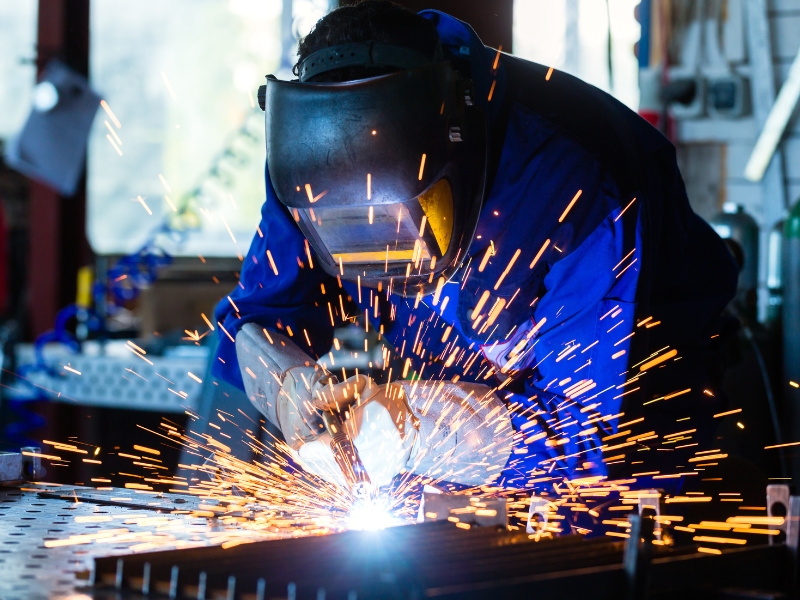
The short version of MIG welding vs TIG welding: MIG feeds a wire continuously and lays down metal fast, while TIG uses a non-consumable tungsten electrode and gives the welder precise control over a much smaller, cleaner weld. MIG is quicker and better suited to production work and thicker material. TIG is slower, more controlled, and the choice when the weld will be visible or the material is thin. Most shops run both, because most projects have some of each.
How Does MIG Welding Work?
A MIG gun feeds a spool of wire through the torch and into the joint while shielding gas protects the weld pool from the air. The wire is both the electrode and the filler, so the welder can keep moving without stopping to add material.
That continuous feed is what makes MIG fast. It deposits metal quickly, handles longer runs without interruption, and is more forgiving of variation in fit-up. On structural work, brackets, frames, enclosures, and anything where the weld will be ground, painted, or hidden, that speed translates directly into cost.
How Does TIG Welding Work?
TIG uses a tungsten electrode that does not melt into the weld. The arc heats the material, and the welder adds filler rod separately by hand, one dab at a time, while controlling heat input with a foot pedal or torch control.
Separating the heat source from the filler is the whole advantage. The welder controls exactly how much heat goes in and exactly how much metal is added, which produces a narrow, precise, clean weld with very little spatter. It is slower by nature, because control and speed are trading against each other.
What Do You Actually Notice in MIG Welding vs TIG Welding?
Appearance
TIG produces the stacked-dime bead people picture when they think of an attractive weld, with little spatter and minimal cleanup. MIG beads are wider and typically leave some spatter to clean up. If the weld will be seen on a finished product, that difference drives the decision on its own.
Price
MIG, clearly, on most work. Continuous wire feed and higher deposition mean fewer hours in the same joint. On a long run of structural welding, the difference is substantial. TIG costs more per inch of weld because it takes more time per inch.
Materials
MIG handles mild steel and stainless well and works on aluminum with the right setup. TIG handles stainless, aluminum, and thinner or more sensitive materials with more control, and it is the usual answer when the material is unforgiving or the joint is small.
Thickness
TIG, without much argument. Fine heat control is what keeps thin sheet from burning through or distorting. MIG puts more heat in faster, which is an advantage on heavy material and a liability on light gauge.
Which One Does Your Project Need?
Ask what the weld has to do. If it has to hold, be produced efficiently, and end up hidden or finished over, MIG is usually right. If it has to look good in the final product, sit on thin material, or hold tight distortion control, TIG earns its extra time.
For custom stainless work that will be seen, such as a countertop seam, a railing, or an exposed frame, TIG is generally the answer. For a run of brackets that get powder coated, MIG almost always is.
Why Would a Shop Use Both on One Job?
Because most assemblies have a mix of joints. The hidden structural welds inside a frame do not need the appearance of the visible seam on the outside, and paying for TIG time on both is wasted money. Choosing process by joint rather than by job is common practice, and it keeps cost down without giving up the finish where it matters.
Common Questions About MIG Welding vs TIG Welding
Is one stronger than the other?
A properly executed weld in either process can be plenty strong. Strength comes from joint design, fit-up, penetration, and welder skill far more than from which process was chosen.
Is TIG always better?
No. It is more controlled and better looking, and it costs more time. On a joint that will never be seen, that spend buys nothing you can use.
Which process should I ask for on a quote?
Describe what the finished part needs to look like and where it will be used, and let the shop recommend the process. Specifying it yourself can raise the price without improving the result.
Can both processes be used on stainless steel?
Yes. Both weld stainless routinely. TIG is more common where the weld stays visible, and post-weld finishing matters either way for both appearance and corrosion resistance.
Have a Welding Project?
Tell us what the part is and where the welds will be seen, and we’ll follow up with a clear quote, fast.
When to Use Water Jet Cutting for Metal Fabrication
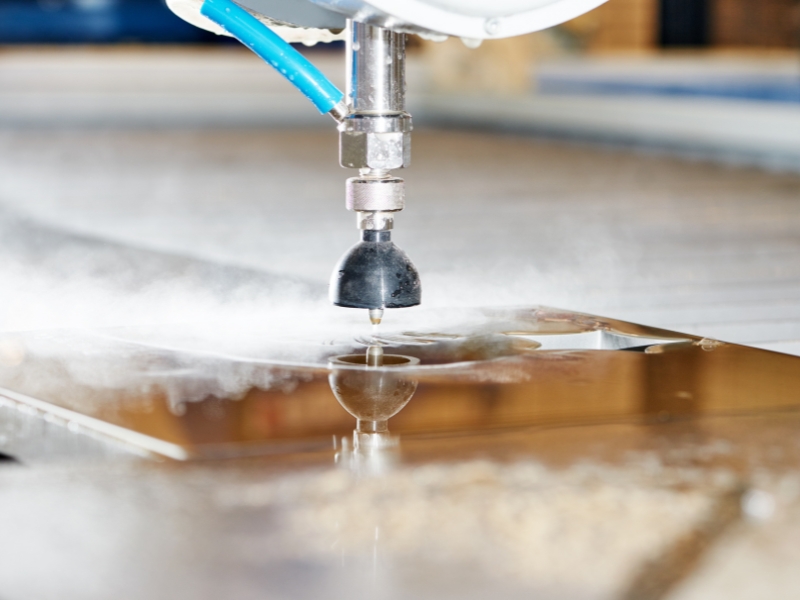
Knowing when to use water jet cutting comes down to reading a few signals in your own drawing. The process cuts with pressurized water and abrasive rather than heat, so it earns its place whenever heat would damage the part, the material is thick, the geometry is complicated, or the job involves something other than sheet metal. On thin steel in high volume, another process is usually faster and cheaper. Here is how to tell which situation you are in before you request a quote.
When to Use Water Jet Cutting: What You Should Look for in Your Drawing
Five things push a job toward water jet, and most parts that belong there show at least two of them. Run through your drawing and see how many apply.
Does Your Part Need to Stay Cool?
This is the strongest signal. Water jet cutting is a cold process, so there is no heat-affected zone along the edge and no change to the temper, hardness, or grain structure of the material next to the cut.
That matters on hardened and heat-treated material, where a thermal process can undo the treatment right where the part is most likely to be loaded. It matters on parts with critical requirements near the cut edge. And it matters on plastics, composites, and laminates that melt, char, or delaminate under heat. If your material was heat-treated on purpose, cutting it cold protects the work already done.
Is the Geometry Complicated?
Water jet cutting follows intricate profiles without tool wear changing the result partway through a run. Interior cutouts, tight radii, sharp interior corners, and nested shapes all cut cleanly, and the tenth part matches the first. There is no tooling to make, which is why one-off and short-run work with complex outlines often lands here even when the material would be easy to cut another way.
Is the Material Thick?
Thermal cutting processes lose speed and edge quality as material gets heavier. Water jet slows down as well, but the edge stays consistent, so on heavy plate it frequently becomes the practical choice even when another process could technically make the cut. If your part is plate rather than sheet, water jet is worth pricing.
Does the Job Involve More Than One Material?
Water jet cutting is close to material-agnostic. Stainless, aluminum, mild steel, copper, titanium, stone, glass, composite, rubber, and foam all run on the same machine. When a project includes gaskets alongside metal parts, or a stone or composite element next to a fabricated bracket, consolidating those cuts onto one process removes a vendor and a handoff from the schedule.
Does the Edge Need to Be Clean Off the Machine?
Water jet leaves a matte, sandblasted edge with very little burr, which often means no deburring step at all. On parts where secondary finishing would otherwise eat labor hours, that changes the total cost even when the cutting itself is slower. For stainless work in particular, an edge that needs no rework is worth quoting against a faster process that does.
Which Process is Right For You?
Being straight about this makes the rest of the guidance more useful. Water jet is not the answer for thin sheet metal in production volume, where thermal cutting is meaningfully faster and cheaper per part. It is not the answer when the part is simple, the material is ordinary, and quantity is high. And it is not the answer when a formed or machined feature would be a better way to get the geometry than cutting it.
If your job is thin, simple, high volume, and made of standard steel, price it both ways and let the numbers decide.
Common Questions About When to Use Water Jet Cutting
Does water jet cutting warp parts?
Not from heat, since none is introduced. That is one of the main reasons flat parts with tight flatness requirements are cut this way.
Will the cut edge need finishing?
Often not. The edge comes off matte with minimal burr. Whether it needs further work depends on the appearance standard the finished part has to meet.
Can water jet cut material that is already painted or coated?
Generally yes, since there is no heat to burn or blister a coating. Tell us about the coating when you request a quote so it factors into setup.
How do I know if my part is a water jet job?
Send the drawing with material, thickness, quantity, and any heat treatment or coating noted. Those details make the process choice obvious quickly.
Have a Part That Cannot Take Heat?
Send us your drawing or DXF, and we’ll follow up with a clear quote for water jet cutting, fast.

Laser Cutting vs. Water Jet Cutting: Which Process Fits Your Project?
Laser cutting vs water jet cutting is decided by heat more often than by anything else. A laser melts and blows material away, which is fast and precise but leaves a heat-affected zone along the cut. A water jet cuts cold, using pressurized water and abrasive, so the material next to the cut is unchanged. If your part cannot tolerate heat, the decision is already made. If it can, then thickness, edge finish, material type, and cost per part sort out the rest.
Does Laser Cutting vs Water Jet Cutting Come Down to Heat?
For a large share of jobs, yes. Laser cutting works by melting a narrow line through the material, which leaves a thin band along the edge where the metal was heated and cooled quickly. On most parts that band is irrelevant. On hardened or heat-treated material, on parts with tight requirements near the cut edge, and on some plastics and composites, it is not.
Water jet cutting removes material by erosion instead of melting, so nothing near the cut changes temper, hardness, or structure. That is the entire reason the process exists alongside laser rather than being replaced by it.
Water jet cutting removes material by erosion instead of melting, so nothing near the cut changes temper, hardness, or structure. That is the entire reason the process exists alongside laser rather than being replaced by it.
What Is the Difference in Edge Quality?
A laser edge on thin sheet is clean, square, and often ready to use as-is. As thickness increases, laser edges pick up more taper and dross, and secondary finishing becomes more likely.
A water jet edge comes off with a slightly matte, sandblasted texture and no burr worth mentioning. It stays consistent as thickness increases, though the cut can taper slightly on thicker material unless the machine compensates for it.
Which Process Handles Thicker Material?
Water jet, generally. Laser cutting is most efficient on thinner sheet and loses speed and edge quality as material gets thicker. Water jet cutting keeps working through much heavier plate, just more slowly. For thick stainless or aluminum plate, water jet is often the practical answer even when a laser could technically make the cut.
What Materials Can Each Process Cut?
Laser cutting is a metal process for most shops, and it handles reflective materials like aluminum and copper less readily than steel. Water jet cutting is close to material-agnostic. Metal, stone, glass, composite, rubber, and foam all cut on the same machine, which matters when a job involves something other than sheet metal.
For stainless specifically, both processes are used routinely, and the choice usually turns on thickness and whether the edge will be visible or further worked.
Which Is Faster and Cheaper Per Part?
On thin sheet in volume, laser cutting is generally faster and cheaper per part, and the gap widens as quantity climbs. Water jet runs slower and carries abrasive cost, which shows up on high-volume thin-gauge work.
That comparison flips on thick material, on parts that would need deburring or heat-affected material removed after lasering, and on short runs where setup dominates. Cost per part is the number to compare, not cost per hour.
How Precise Is Each Process?
Both are precise enough for the vast majority of fabricated parts. Laser holds a very narrow kerf, which helps on fine detail, small holes, and tight nesting. Water jet holds close tolerances too, with kerf width and taper as the factors to account for on intricate geometry. Neither is a limitation on typical fabrication work.
Which Process Fits Your Project?
Thin Sheet in Production Volume?
Laser, in most cases. Speed and cost per part favor it clearly, and edge quality on thin material is excellent straight off the machine.
Thick Plate or Heavy Profiles?
Water jet. It keeps a consistent edge through heavier material where laser performance falls off.
Heat-Sensitive or Hardened Material?
Water jet, without much debate. Cutting cold is the whole point, and it protects temper and hardness right up to the edge.
Non-Metal or Mixed-Material Jobs?
Water jet. Being able to cut stone, glass, composite, and metal on one machine consolidates jobs that would otherwise need two processes.
Common Questions About Laser Cutting vs Water Jet Cutting
Can one part use both processes?
Yes, and it happens on jobs where different features have different requirements. There is no rule that a single part has to be cut entirely one way.
Does the heat-affected zone actually matter on ordinary steel parts?
Usually not. It becomes a factor on hardened or heat-treated material, on parts with critical properties near the cut, and where a subsequent operation is sensitive to the condition of the edge.
Which one gives a better edge for a visible finished surface?
It depends on the look you want. A laser edge on thin material is crisp and square. A water jet edge is matte and uniform. Both can be finished further if the appearance has to match a specific standard.
How do I know which one my job needs?
Send the drawing along with the material, thickness, quantity, and anything the part has to survive afterward. Those four details settle it faster than a general comparison can.
Have a Part to Cut?
Send us your drawing or DXF, and we’ll follow up with a clear quote and the process that fits, fast.

Stainless Steel vs. Aluminum Fabrication: How to Choose the Right Material
Stainless steel vs aluminum fabrication usually comes down to four questions: does the part need to resist corrosion, how much does weight matter, how strong does it have to be, and what should it look like when it is finished? Aluminum is roughly a third as heavy as steel and easy to machine. Stainless is stronger, harder, and better under heat and abrasion. Both resist corrosion, but they do it by different mechanisms, and that difference decides more parts than any other factor on this list.
What Is the Core Difference Between Stainless Steel vs Aluminum Fabrication?
Both metals protect themselves with an oxide layer, and that is roughly where the similarity ends. Aluminum forms an oxide skin almost instantly on any fresh surface. Stainless relies on chromium in the alloy to form a passive layer that reforms when the surface gets scratched.
The practical result: aluminum handles ordinary outdoor exposure well and weighs very little, while stainless handles heat, abrasion, harsh chemicals, and sustained wet conditions better. Stainless is also noticeably heavier and costs more per pound in most grades.
Does Your Part Need to Resist Corrosion?
Both do, in different environments. Aluminum performs well in normal weather and is common in outdoor structural and enclosure work. It struggles where it contacts certain other metals, because galvanic corrosion becomes a factor, and it can pit in salty or highly alkaline conditions.
Stainless performs better in food contact, washdown areas, chemical exposure, and anywhere the part gets cleaned aggressively and often. If the part lives in a commercial kitchen, a lab, or a wet processing area, that usually settles the question by itself.
How Much Does Weight Matter?
Aluminum is about a third the density of steel, which matters more than it sounds. On anything lifted, carried, mounted overhead, shipped in volume, or moved as part of a machine, that difference changes the design and the cost of everything around it. On a fixed part that sits on the floor, it may not matter at all.
Which One Is Stronger?
Stainless is stronger and harder in absolute terms, so at a given thickness it carries more load and resists denting and abrasion better. Aluminum wins on strength-to-weight, which is why it dominates wherever mass is the constraint.
The honest answer for most parts is that either can be made strong enough. The real question is what you give up getting there: thickness and bulk with aluminum, or weight and cost with stainless.
How Will the Part Be Finished and Seen?
Stainless is usually left as the finished surface, with the grade of finish doing the visual work. Brushed, polished, and textured all read as intentional, which is why stainless shows up in visible architectural and food service work.
Aluminum is more often anodized, powder coated, or painted, which opens up color but adds a coating that can chip or fade. If the part has to be a specific color, aluminum gives you more room. If it needs to look like metal and keep looking like metal, stainless does that with no coating involved.
How Does Each Metal Behave in the Shop?
Cutting
Both cut cleanly on a laser or a water jet. Aluminum reflects laser energy more than steel does, which affects process selection on some jobs. Water jet cuts both without introducing heat.
Forming
Aluminum forms easily but springs back more, so bend allowances differ. Stainless takes more force to bend and work-hardens as it is formed, which affects tooling and the order of operations.
Aluminum Welding
Aluminum welding demands tighter control of heat input and cleanliness, since its oxide layer melts at a far higher temperature than the metal underneath. Stainless welds readily but distorts if heat is not managed, and welds often need finishing to restore both appearance and corrosion resistance.
Welding
Stainless generally costs more per pound than aluminum, though grade and market conditions move both. Material price is only part of the picture. Aluminum’s lighter weight cuts shipping and handling. Stainless often needs no coating, which removes a finishing step. A part that looks cheaper in raw material can land higher once processing and finishing are counted, so compare quoted parts rather than metal prices.
When Should You Just Send the Drawing?
When the part has competing requirements and no obvious winner, which is most of the time. Weight, strength, corrosion exposure, appearance, and budget rarely point the same direction, and the tradeoff is far easier to evaluate against a specific part than in the abstract. Send the drawing along with where the part will live and what it has to survive, and material selection turns into a short conversation instead of a research project.
Common Questions About Stainless Steel vs Aluminum Fabrication
Is aluminum cheaper than stainless steel?
Per pound, usually. Per finished part, not always, since coating, thickness, and processing all factor in. Quote the actual part rather than comparing raw material prices.
Which one holds up better outdoors?
Both do well. Aluminum is common and effective for general outdoor use. Stainless has the advantage in wet, salty, or frequently cleaned conditions, including near pools and lakefront property.
Can the two be used together in one assembly?
Yes, but contact between dissimilar metals can cause galvanic corrosion once moisture is present, so isolation or fastener selection has to be part of the design. Flag it early if your assembly mixes them.
Which is easier to repair or modify later?
Both can be cut, welded, and modified. Aluminum is easier to machine. Stainless is easier to return to its original appearance after a repair, since there is no coating to match.
Not Sure Which Material Fits?
Send us your drawing along with what the part has to survive, and we’ll follow up with a clear quote, fast.

Why Stainless Steel Cabinets for Outdoor Kitchens Outlast the Alternatives
Stainless steel cabinets for outdoor kitchens hold up because an outdoor kitchen is a harsher place than most people account for while planning one. Rain, humidity, hard freezes, direct sun, and the occasional mouse all work on cabinetry that sits outside year-round, and materials that perform fine indoors fail quickly once exposed. Stainless resists all of it without a coating that can chip or a substrate that can swell. Add cabinets sized around the grill and structure you already have, and the case gets stronger.
What Is a Wisconsin Winter Doing to Your Outdoor Cabinets?
Moisture
Water is the first problem, and it rarely arrives as obvious rain. Humidity, condensation, and splash from a sink or cooler all find their way into cabinet boxes. Particleboard and MDF swell and lose structure. Plywood delaminates. Painted and laminated surfaces bubble and peel from behind once water gets under the finish.
The Freeze-Thaw Cycle
This is what separates a Wisconsin outdoor kitchen from one in a mild climate. Water that has soaked into a material expands when it freezes and contracts when it thaws, and repeating that through a winter pries materials apart from the inside. Anything that absorbs moisture is on a countdown here.
Sun Exposure
Ultraviolet light breaks down finishes, sealers, and plastics. Colors fade, clear coats chalk, and some polymers turn brittle. A surface that looked sharp the first summer can look tired by the third.
Pests
Yes, and it is a real consideration on rural and lake properties. Wood and composite boxes give insects and rodents something to chew and nest in. Sealed metal does not.
How Do Stainless Steel Cabinets for Outdoor Kitchens Handle the Elements?
Stainless steel answers each of those conditions with the same property: corrosion resistance that comes from the alloy itself rather than from a coating applied to the outside.
Water does not soak in, so there is nothing to swell, delaminate, or split when it freezes. There is no paint or laminate layer to bubble, because the finish is the metal. UV exposure does not degrade it. Insects and rodents have nothing to chew. And when a door or box does get damaged, it can usually be repaired or swapped as a single piece rather than pulling apart the whole run.
Does the Grade and Finish of the Steel Matter Outdoors?
More than it does indoors. Stainless comes in different grades, and the ones with higher corrosion resistance perform better in wet or salty conditions. Near a pool, a hot tub, or a lake, that difference shows up faster.
Finish matters too. A brushed finish hides water spotting and fingerprints better than a polished one, which is worth weighing for a surface that will be rained on and wiped down constantly. Ask which grades and finishes your fabricator stocks for outdoor work, and tell them where the kitchen sits.
Why Does Custom Sizing Matter More Outdoors?
An outdoor kitchen is almost never a clean rectangle of standard cabinet widths. It is a grill of a specific size, a side burner, a cooler drawer, a sink, and often a masonry or framed structure that was poured or laid before anyone measured for cabinetry. Standard dimensions leave gaps, and gaps outdoors collect water and debris.
Cabinets fabricated to your measurements close around the equipment you actually bought, with cutouts sized to your appliances and runs that follow the structure already there. Drawer banks, door swings, and access panels land where you use them instead of where a stock configuration puts them.
What Maintenance Do Outdoor Stainless Cabinets Actually Need?
Less than the alternatives, though not none. Wash the surfaces periodically with mild soap and water to clear pollen, dust, and grill residue, then dry them to avoid spotting from hard water. Wipe up anything salty or acidic that sits. Keep grill grease from baking onto the doors across a season. If a spot of surface rust appears, it is almost always contamination from another metal sitting on the surface rather than the stainless corroding, and it cleans off with a non-abrasive stainless cleaner worked along the grain.
Common Questions About Stainless Steel Cabinets for Outdoor Kitchens
Do stainless cabinets get too hot to touch in direct sun?
Any material in full sun heats up, and a dark surface gets warmer than a light one. Stainless in a brushed finish reflects a fair amount of light and generally stays manageable, though shade or an overhang helps regardless of material.
Will they rust?
Stainless resists rust rather than being immune to it. Most rust-colored spotting people notice is surface contamination from another metal, not the cabinet corroding, and it cleans off. Choosing an appropriate grade for a wet or lakeside location reduces the chance further.
Can stainless cabinets match a masonry or stone outdoor kitchen?
Yes, and the pairing is common. Stainless doors and drawer fronts set into a stone or stucco structure is one of the more frequent outdoor kitchen configurations, with the metal carrying the working surfaces and the masonry carrying the look.
Can I add cabinets to an outdoor kitchen I already have?
Usually. Fabricated cabinets can be sized to fill an existing opening or extend a run, which is far easier than trying to match a discontinued stock line.
Planning an Outdoor Kitchen?
Send us your layout and appliance list, and we’ll follow up with a clear quote for custom stainless steel cabinets, fast.
Benefits of Stainless Steel Countertops Made Custom for Your Space
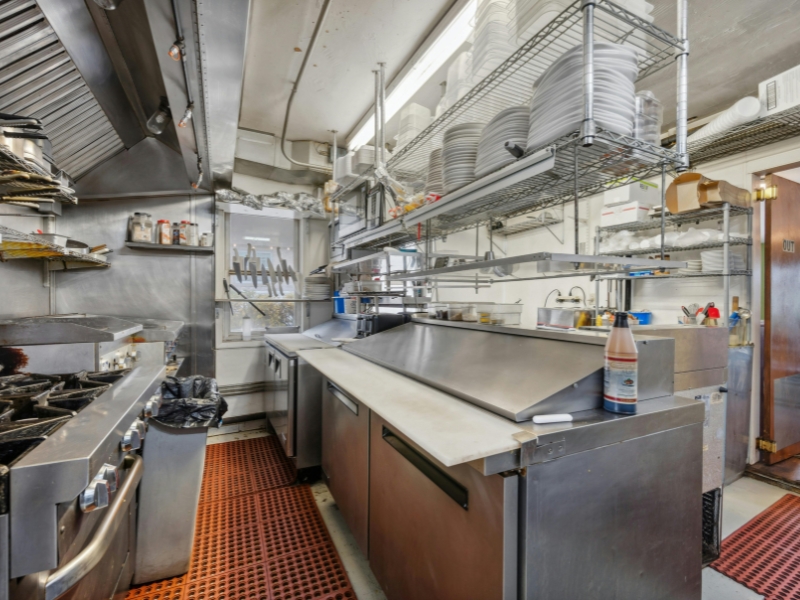
The benefits of stainless steel countertops come down to a surface that does not absorb anything, does not need sealing, and does not flinch at heat. Add custom fabrication and you get one more advantage a prefabricated counter cannot offer: the countertop is made to your measurements instead of your layout being adjusted to fit a stock size. That combination is why the same material turns up in restaurant prep lines and in home kitchens where the owner cooks seriously. Here is what each of those advantages actually means day to day.
What Are the Main Benefits of Stainless Steel Countertops?
A few properties do most of the work here, and they reinforce each other.
Nonporous
Yes, and that single property drives most of the rest. There is nowhere for liquid, oil, or bacteria to soak in, so red wine, lemon juice, tomato, and raw chicken all sit on top of the surface until they are wiped away. Porous surfaces like natural stone rely on a sealer to imitate that behavior, and a sealer wears down over time. Stainless has no coating to lose.
Heat Tolerance
You can set a hot pan directly on it. Stainless steel does not scorch, discolor, or weaken from the kind of heat a kitchen produces, which is why professional kitchens standardized on it long before it became a residential look. No trivet requirement, and no worrying about a cast iron pan leaving a permanent ring.
Low Maintenance
No. Upkeep is soap, water, and drying to avoid water spots, plus an occasional stainless cleaner if you want the finish to look even. Nothing gets resealed on a schedule and nothing needs a specialty product. Across years, that difference adds up more than most people expect when they are comparing surfaces in a showroom.
Where Does Custom Fabrication Change the Answer?
This is what separates a fabricated counter from a prefabricated one, and it is where most of the value lives on a real project.
What Can Be Fabricated Into the Countertop Itself?
Sink bowls can be welded in and polished so there is no rim to trap crumbs. Drainboards can be formed directly into the surface with a slope toward the sink. Backsplash lips can turn up the wall as one continuous piece rather than a separate strip caulked into place. Cooktop and faucet cutouts land exactly where your appliances land. Each of those is a spot where a standard counter forces a compromise.
What Happens When the Walls Are Not Square?
Almost no room is perfectly square, and older buildings are worse. A fabricated counter is cut to measurements taken in your space, so an out-of-square wall becomes a dimension on the drawing instead of a gap you fill with caulk. The same goes for an island with an angle, a peninsula that has to clear a doorway, or a prep run that steps around equipment already in place.
Which Finish Should You Choose?
Finish changes both how the counter looks and how it wears, so it is worth making a deliberate decision rather than defaulting.
A brushed finish is the common choice. Its directional grain hides fingerprints and the fine scratching any working surface picks up.
A polished finish reflects light and reads as a feature surface, which suits a bar or an island more than a heavy prep area.
A textured finish hides wear best and is often specified for high-traffic commercial counters.
Flexible Applications
The demands overlap more than people assume. Both see heat, standing water, acidic food, and repeated cleaning. A restaurant just compresses years of that into months. A homeowner outfitting an outdoor kitchen adds weather and temperature swings on top of normal use, and the same material answers all three. Restaurants tend to specify heavier materials and simpler finishes, while residential projects lean toward edge profiles and integrated details, but the surface underneath does the same job.
What Does Stainless Steel Not Do Well?
Worth being straight about. It shows fine scratches, most noticeably in the first year, and a brushed finish absorbs them better than a polished one. A heavy impact can dent it in a way stone will not. Fingerprints show on polished finishes. And in a kitchen designed around warm traditional materials, a large expanse of stainless can read cold unless wood, stone, or color balances it elsewhere in the room. None of that is a dealbreaker. It is just worth knowing before you commit.
Common Questions About the Benefits of Stainless Steel Countertops
Do stainless steel countertops scratch?
Yes, and most owners describe the result as a patina rather than damage. Fine scratches accumulate early, then stop registering as they blend into the overall surface, particularly on a brushed finish.
Can a sink be part of the countertop itself?
Yes. An integrated sink is welded into the counter and the seam is polished out, so there is no rim or joint where debris collects. It is one of the more common reasons people choose fabricated stainless over a prefabricated surface.
Are stainless steel countertops only for modern kitchens?
No. Finish and edge profile carry most of the visual weight. A brushed finish with a rolled edge alongside wood cabinetry reads far warmer than a polished square-edge counter in an all-white kitchen.
How long do stainless steel countertops last?
Decades, with normal care. The surface changes appearance as it picks up a patina, but it does not degrade the way a sealer or a coating does, and there is no point at which it has to be refinished to keep working.
Thinking About a Stainless Counter?
Send us your layout, and we’ll follow up with a clear quote for custom stainless steel countertops, fast.
Stainless Steel Countertops vs. Granite: Which Is Better for Your Space?
Choosing between stainless steel countertops vs granite comes down to one question: what actually happens on that surface every day? Stainless steel handles constant heat, standing liquid, harsh cleaners, and heavy daily use, and it can be fabricated to fit a layout exactly. Granite brings natural color and pattern, resists scratching better, and suits a kitchen where the counter is meant to be the visual centerpiece. Neither material is the right answer in every room. The decision gets a lot easier once you are honest about how hard the surface will be worked.
How Do Stainless Steel Countertops vs Granite Compare at a Glance?
Both surfaces last for decades with reasonable care. They age differently, though, and that is the part worth understanding before you commit. Stainless picks up fine scratches and the occasional dent, settling into a soft patina that some people like and others do not. Granite chips at exposed edges and will stain if its sealer wears thin without anyone noticing.
There is also a structural difference that matters more than most comparisons admit. Granite reaches you as a slab of stone cut to fit your space. A stainless counter is fabricated to your measurements from the start.
How Does Each Surface Handle Daily Use?
Which One Handles Heat Better?
Stainless steel takes direct contact with hot pans without scorching, discoloring, or losing strength, which is why it is standard in professional kitchens. Granite tolerates heat well too, but repeated thermal shock in the same spot can cause cracking near seams and cutouts, and heat gradually degrades surface sealers.
Which One Scratches or Dents More Easily?
Granite is the harder surface and resists scratching from knives and cookware. Stainless will show fine scratches, most visibly in the first year. On a brushed finish, those blend into the grain and stop registering as damage. Impact runs the other direction: a dropped stockpot is more likely to dent stainless and more likely to chip granite.
How Does Each Surface Handle Stains and Cleanup?
Stainless steel is nonporous, so wine, citrus, oil, and raw protein sit on the surface and wipe away rather than soaking in. Granite is porous and depends on a sealer to do that same job. In a home kitchen, resealing is a manageable habit. In a restaurant kitchen running fourteen hours a day, it becomes one more maintenance item competing for attention.
What Does Upkeep Look Like Year After Year?
Stainless steel needs mild soap and water, drying to prevent water spots, and occasional attention from a cleaner made for stainless. Nothing gets resealed and nothing runs on a treatment schedule.
Granite needs periodic resealing on a cycle that varies with the stone, the sealer, and how hard the counter gets used. Missed resealing is behind most granite staining problems people actually run into. Neither surface is demanding. Stainless simply has fewer steps to remember.
How Do Fit, Seams, and Custom Sizing Differ?
This is where the comparison stops being about material properties. Granite arrives as slabs, so your layout has to work around slab dimensions, and seams land where the stone runs out rather than where you would choose. Custom stainless steel countertops are cut and formed to your measurements, with sink and cooktop cutouts, edge profiles, and integrated backsplash lips fabricated into the piece instead of added afterward.
For a straightforward rectangular run, this barely registers. For an island with an odd angle, a prep line that has to clear equipment already in place, or a counter meeting a wall that is not square, it often matters more than everything above it.
What Do Stainless Steel Countertops Cost Compared to Granite?
Both materials cover a wide price range, which is why per-square-foot averages mislead. Granite pricing tracks the stone itself, from common domestic slabs at the low end to rare imported material at the top, plus fabrication and installation. Stainless pricing tracks gauge, finish, total square footage, and how much fabrication the piece actually requires. A simple counter with one sink cutout lands well below an L-shaped run with an integrated drainboard and a waterfall edge.
Neither material is dependably cheaper than the other. Price your real layout rather than a category.
Which Material Works Best in Each Room?
The stainless steel countertops vs granite question resolves quickly once you name the room.
What Works Best in Commercial Kitchens and Prep Lines?
Stainless, with little debate. Heat tolerance, a nonporous surface, and the ability to fabricate counters around equipment that is already in place make it the working standard in food service.
What About Home Kitchens?
Genuinely open. Granite suits a traditional or transitional kitchen where the counter carries visual weight. Stainless suits homeowners who cook hard, want a clean modern line, or are matching an existing appliance package. Plenty of kitchens use both, with granite on the perimeter and stainless on an island or a dedicated baking station.
Which Is Better for a Bar or Entertaining Space?
Stainless deals with standing liquid, citrus, and melting ice better than sealed stone, and a polished bar top throws light in a way stone does not.
Which One Belongs in an Outdoor Kitchen?
Stainless has the clear edge outdoors. Granite can go outside, but freeze-thaw cycling and sealer breakdown under sun exposure are real problems in a Wisconsin climate.
Common Stainless Steel Countertops vs Granite Questions We’re Asked
Does stainless steel scratch more easily than granite?
Yes. Granite is harder and resists scratching better. What changes the picture is how each material shows its wear. Fine scratches disappear into a brushed stainless finish over time, while a chip in a granite edge stays a chip.
Are stainless steel countertops noisy to work on?
Less than people expect, because it depends on what sits underneath. A stainless top fabricated over a solid substrate dampens sound considerably compared to an unsupported sheet, which is worth specifying when the counter sits in an open kitchen.
Can stainless steel countertops look warm instead of industrial?
Finish and edge profile do most of that work. A brushed or textured finish with a rolled edge reads much softer than a polished square-edge counter, and pairing stainless with wood or stone elsewhere in the room balances the look.
Is stainless steel cheaper than granite?
Sometimes, depending on the specific stone and the amount of fabrication your layout requires. There is no reliable rule in either direction, which is why both are worth quoting on your actual measurements.
Comparing Options for Your Space?
Send us your layout, and we’ll follow up with a clear quote for custom stainless steel countertops, fast.